
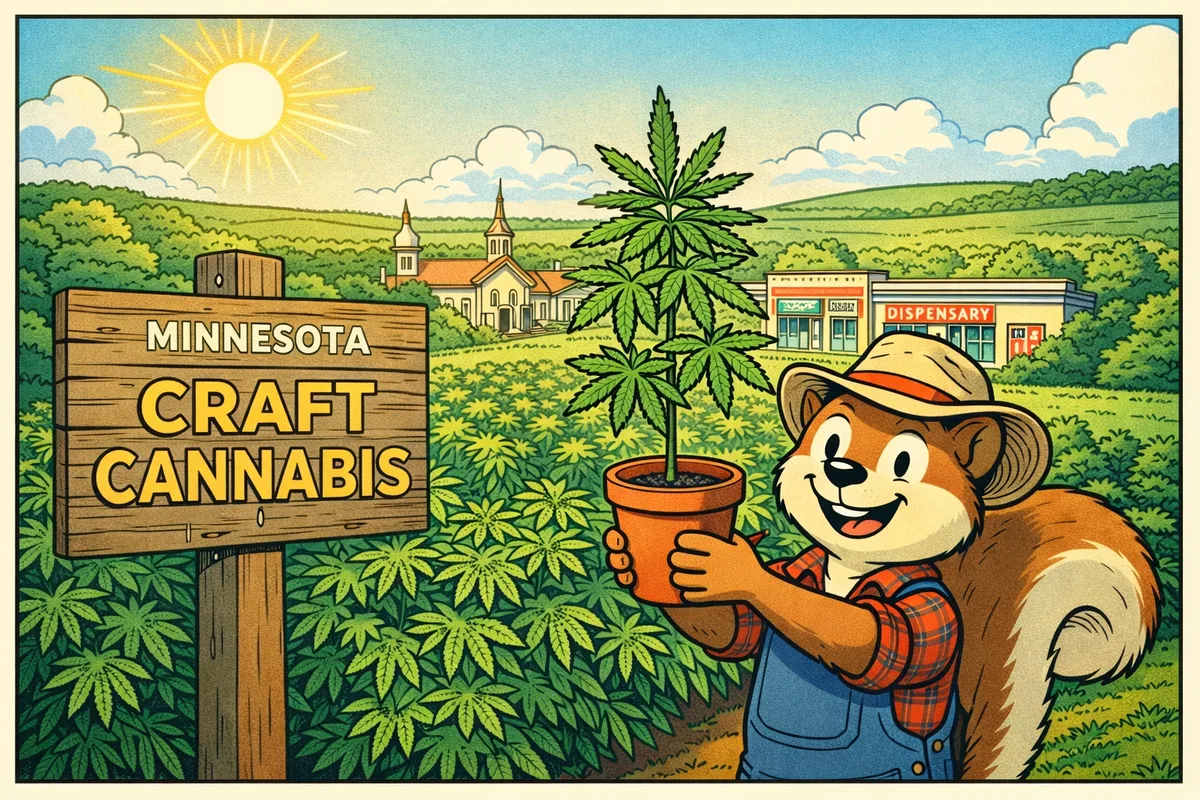
Something happened in Minnesota this week that most of the industry missed: the first craft cannabis products reached recreational dispensary shelves. It sounds like a local story. It isn't.
Craft cannabis — a dedicated licensing tier designed to keep large multistate operators from dominating every market — is about to become one of the most-copied policy experiments in the US.
What Craft Cannabis Actually Means
Minnesota's craft license is purpose-built to level the playing field. Key features:
- Lower entry costs than standard commercial licenses
- Smaller production caps — craft operators cannot scale to MSO volume
- State-grown requirement — all product must come from Minnesota soil
- Direct-to-consumer emphasis — craft products marketed around local provenance, small-batch quality, grower identity
The first products hit shelves on March 11, according to reporting from MPR News. Early dispensary feedback was positive, with budtenders noting that customers were specifically asking for local, small-farm options they could trace back to a grower by name.
Why the Rest of the Country Is Watching
The craft licensing model directly addresses the dominant complaint in mature cannabis markets: commoditization. In states like California, Colorado, and Oregon, wholesale cannabis prices have collapsed as large-scale commercial operators flooded supply. Small farms have been priced out. Dispensaries compete almost entirely on discount.
Minnesota's approach borrows heavily from the craft beer and wine industries — where tiered licensing, geographic origin designations, and direct-to-consumer relationships have proven commercially durable at small scale.
If the early data supports the model — and Minnesota cannabis regulators are watching sell-through rates carefully — expect other states currently drafting or revising cannabis frameworks to include similar provisions.
New York, New Jersey, and Illinois are among the states where craft licensing conversations are already active at the legislative level.
The MSO Backlash Is Shaping Policy
There's a political dimension here that goes beyond market economics. In multiple states, the rollout of large-scale multistate operators before small and equity applicants were ready created significant political backlash — from community groups, equity advocates, and independent retailers.
Craft licensing is, in part, a policy response to that backlash. It carves out protected space by statute, rather than relying on market forces to support small operators organically. Minnesota regulators specifically designed the tier to ensure that craft licenses could not be acquired by, or contractually tied to, larger commercial operators.
What It Means for Consumers
For cannabis consumers, craft licensing introduces something the market has largely lacked: genuine product differentiation by origin. Rather than a house brand from a vertically integrated MSO, craft products come with a grower name, a farm location, and in some cases information about specific cultivation practices.
This mirrors what happened in the craft beer industry in the 1990s — the emergence of a higher-engagement consumer segment willing to pay a modest premium for story, locality, and transparency.
Whether that premium holds at scale in cannabis remains to be tested. Minnesota will have data within 12 months.