Texas doesn't have legal cannabis. It never did. What it had was a hemp loophole — and as of now, that loophole is getting hammered shut.
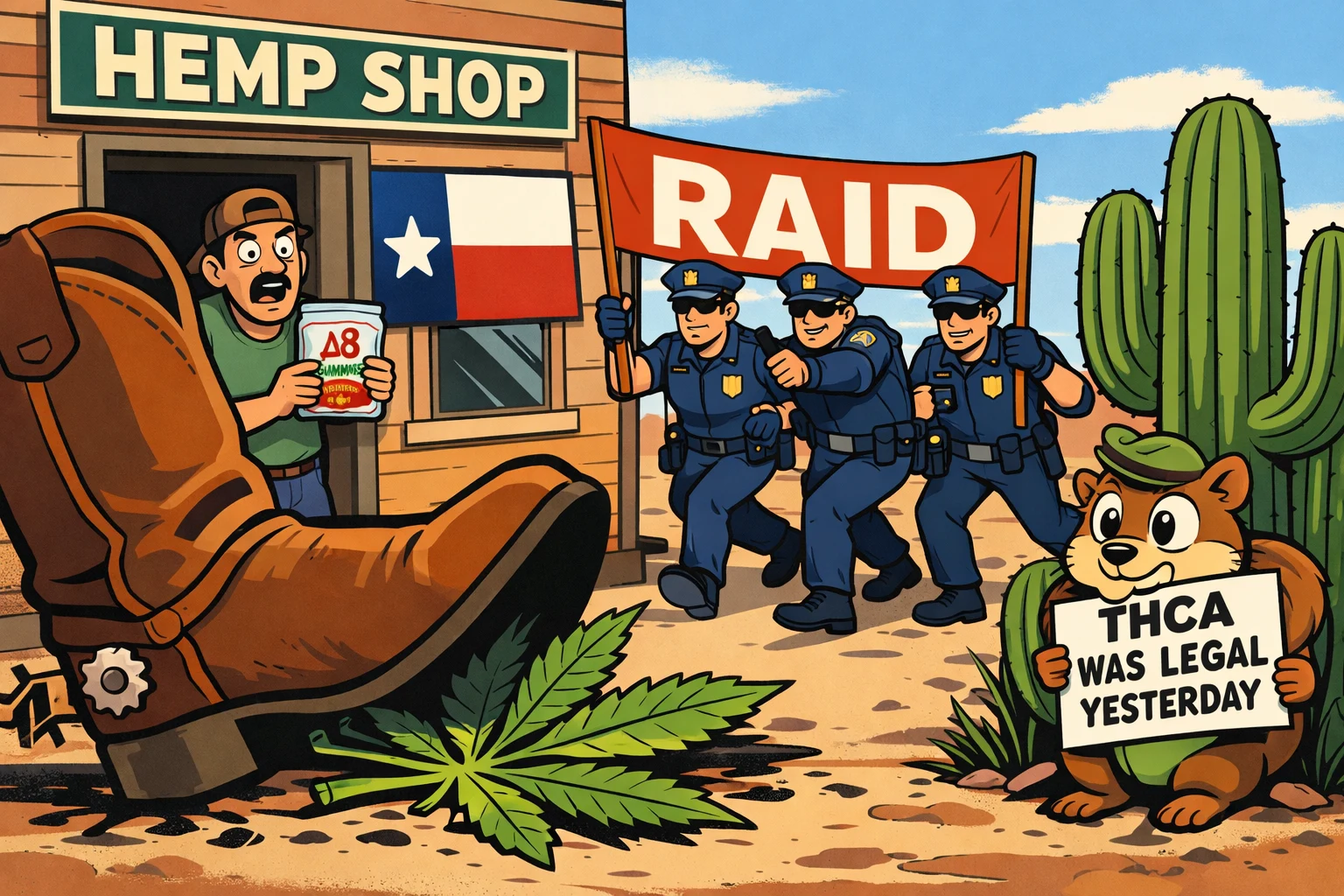
New rules from the Texas Department of State Health Services (DSHS) have given law enforcement a clear framework to raid hemp retailers selling delta-8 THC, delta-10 THC, THCA flower, and other high-potency hemp-derived products. Marijuana Moment is reporting that industry insiders expect a significant spike in enforcement actions starting immediately. This isn't a future threat — it's happening now.
The loophole that built a billion-dollar industry
After the 2018 federal Farm Bill legalized hemp (cannabis with less than 0.3% delta-9 THC), a wave of entrepreneurs spotted an opportunity: what about all the other cannabinoids? Delta-8 THC gets you high. So does delta-10. And THCA — technically a non-psychoactive compound — converts almost entirely into regular THC when you smoke or vaporize it. None of these were explicitly addressed in Texas law.
The result: thousands of hemp shops opened across Texas selling products that were functionally indistinguishable from illegal cannabis flower, in a state with 30 million people and zero recreational access. Houston, Dallas, Austin, San Antonio — every major city had hemp shops on every other corner. The gray market was enormous.
What the new rules actually say
The DSHS rules target products based on total THC content, not just delta-9. Under the new framework, products that test above 0.3% total THC — including after conversion from THCA — are classified as controlled substances. That means the THCA flower that hemp shops have been selling legally is now, functionally, marijuana under Texas law.
Delta-8 gummies, delta-10 vapes, and similar synthetically derived cannabinoids are also in the enforcement crosshairs. The rules also tighten lab testing requirements, packaging standards, and retailer licensing in ways designed to squeeze out operators who built their business on ambiguity.
Who gets hit
The immediate impact lands on an estimated 7,000+ hemp retailers across Texas and the employees, landlords, and supply chains that depend on them. Many of these businesses were fully compliant with previous rules and invested heavily in a legal market. Now they face a binary choice: pull the products that make up the majority of their revenue, or wait for the raids.
Larger operators with legal teams saw this coming and have been diversifying their product lines toward compliant CBD and wellness products. Smaller shops — many of them in rural Texas towns where the hemp store is the only cannabis-adjacent business for a hundred miles — are more exposed.
The patients and consumers left behind
Texas's Compassionate Use Program (CUP) exists but is among the most restrictive in the country: low-THC cannabis oil, only for epilepsy, terminal cancer, PTSD, and a handful of other conditions, through a tiny network of licensed dispensaries. For the vast majority of Texans who used hemp-derived THC products for anxiety, pain, or sleep — that option simply disappears.
The political math in Austin isn't moving toward legalization. Governor Abbott has opposed recreational cannabis; the legislature is dominated by Republicans who won't touch the issue. The hemp crackdown isn't a transition to something better. For most Texans, it's just an end.
What operators should do now
If you run a hemp business in Texas: get a lawyer today. Document your current inventory, your lab certificates of analysis, and your compliance history. The rules create some ambiguity about grandfathering existing stock. That ambiguity won't protect you in a raid, but it may matter in prosecution. Pull THCA flower and high-potency delta-8 products from shelves immediately — the risk-reward calculation has changed completely.