
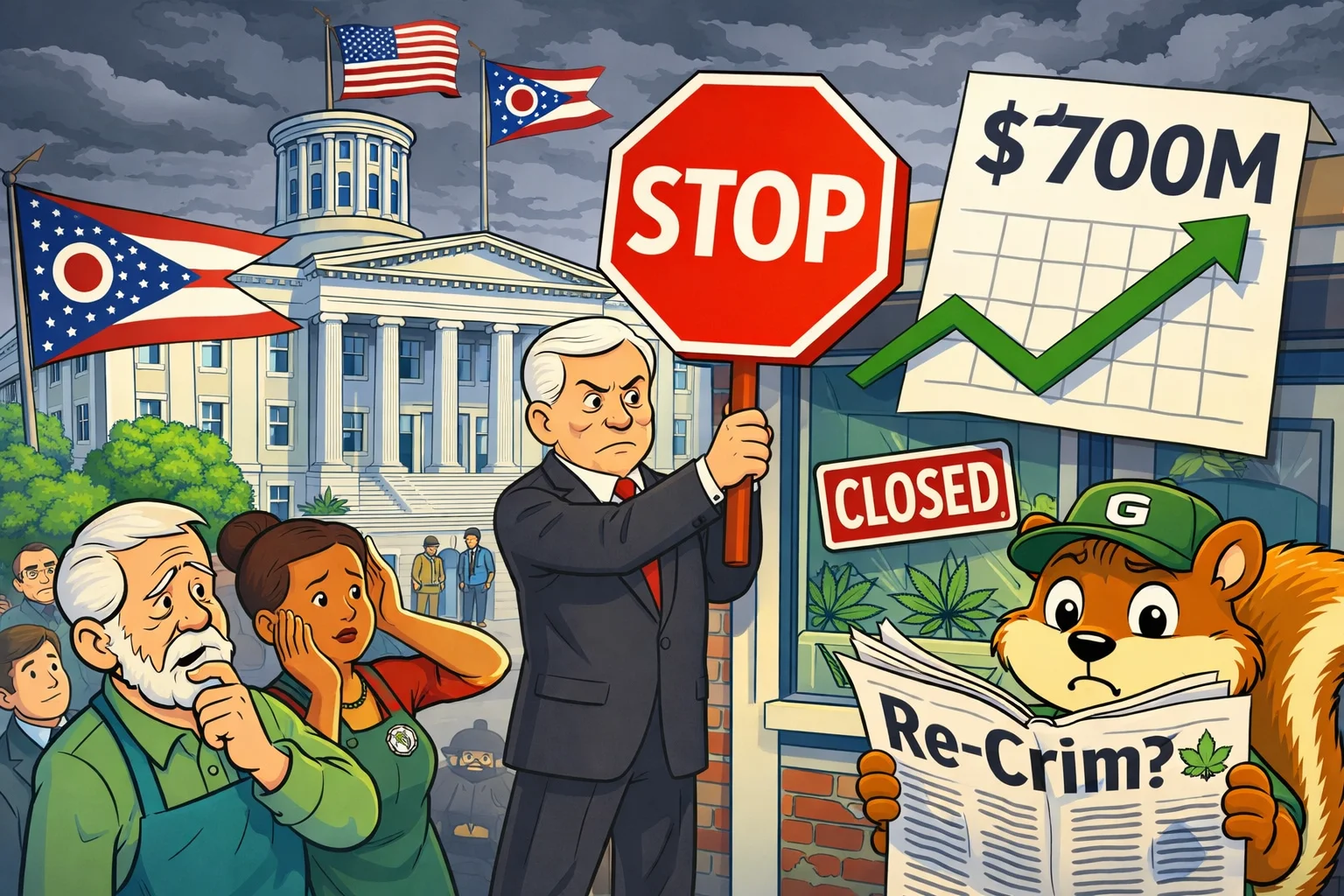
Ohio voters legalized cannabis in November 2023. By 2025, the state hit $700 million in sales. Now Republican lawmakers want to claw back key provisions — and the last line of defense just collapsed.
What Ohio's GOP Is Trying to Do
Ohio's Republican-controlled legislature has advanced a bill that would effectively ban most intoxicating hemp-derived products — Delta-8 THC, Delta-9 edibles, and a range of other cannabinoids that have flourished in the state's legal grey zone. Critics say the bill doesn't stop there: the restrictions are written broadly enough to threaten the broader cannabis retail market.
The measure would force thousands of hemp businesses to either reformulate their products or close entirely. For licensed cannabis dispensaries, the impact is less direct — but the regulatory chilling effect could be severe.
The Signature Campaign That Failed
Opponents of the bill launched a citizen referendum campaign — the mechanism Ohio voters used to legalize cannabis in the first place. The plan: gather enough signatures to put the restriction bill on the November ballot, letting voters decide.
It failed. The campaign did not collect enough signatures to qualify for a ballot referendum, according to reporting from Ohio Capital Journal. The failure means the legislature's bill can move forward without a public vote.
"Marijuana will be re-criminalized in Ohio, businesses will close, workers will lose their jobs, and consumers will be denied their right to products they should be able to purchase," warned campaign organizers in a statement after the deadline passed.
The Bigger Problem: Federal Confusion Amplified at State Level
Ohio's situation reflects a national tension. Cannabis is legal under state law, but hemp-derived cannabinoids exist in a regulatory gap created by the 2018 Farm Bill. States are increasingly moving to close that gap — sometimes in ways that sweep up licensed cannabis products along with the unregulated hemp market.
For the industry: Ohio was one of the fastest-growing cannabis markets in the Midwest, on track to challenge Michigan and Illinois. That trajectory is now in jeopardy. Operators who expanded based on the 2023 legalization vote are watching a bait-and-switch unfold in real time.
What comes next: Legal challenges are likely. Industry groups are exploring injunctive relief. But with no ballot option available, the fight moves to the courts — and Ohio's $700 million market hangs in the balance.