
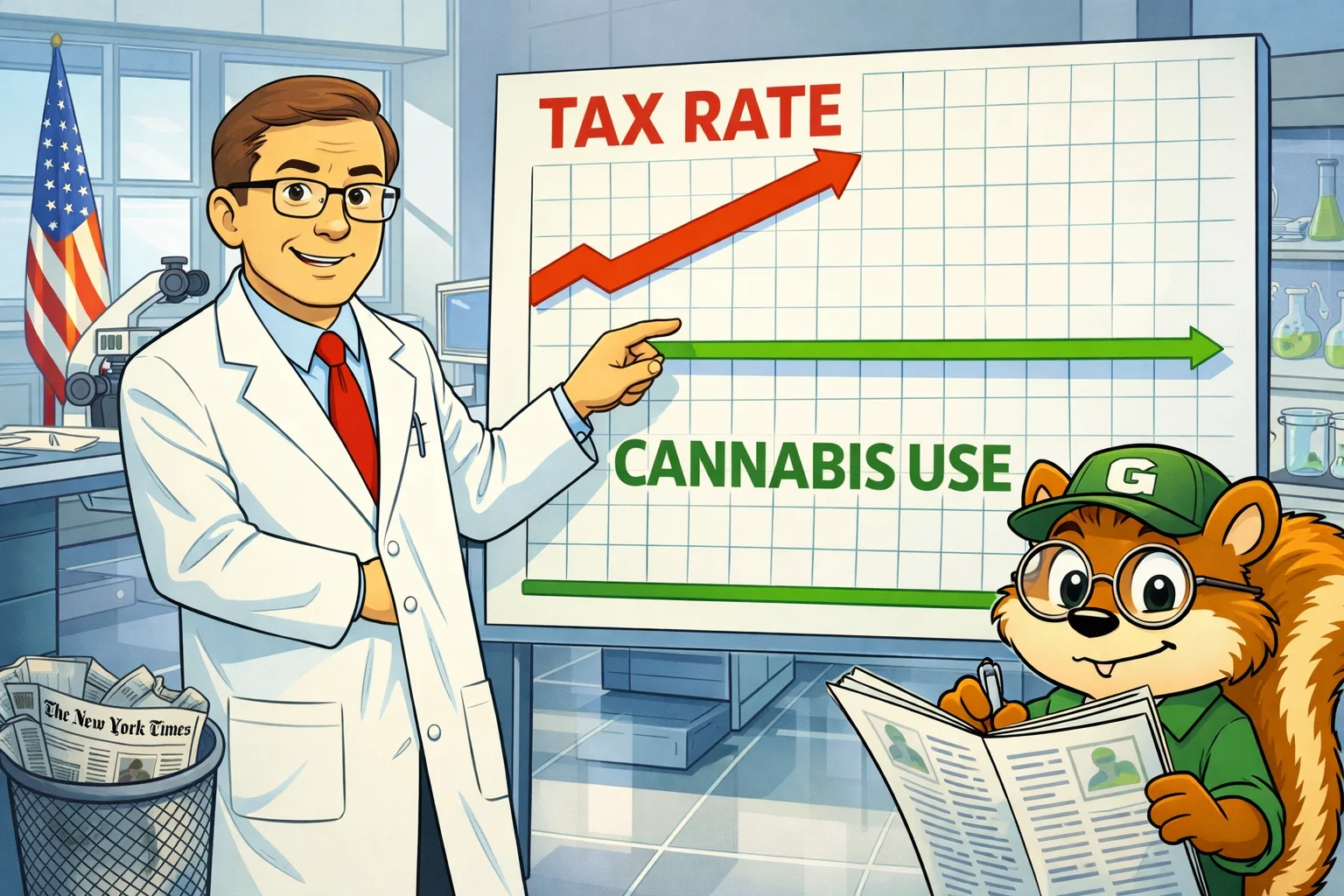
A new scientific analysis has landed a direct hit on one of cannabis policy's most stubborn myths: high taxes deter use.
They don't. At least not in any meaningful way — and a major new study makes that case with data that's hard to argue with.
What the Research Found
The analysis, which examined cannabis consumption and tax data across multiple US legal states, found no meaningful evidence that imposing higher taxes on marijuana steers people away from using it. Researchers tracked consumption patterns against tax rate changes and found consumption remained essentially flat regardless of tax levels — sometimes even rising when taxes went up, likely because higher prices in the legal market drove consumers toward the cheaper grey or black market.
The finding directly contradicts a recent editorial from The New York Times editorial board, which argued that high taxes are a legitimate and effective policy tool for reducing cannabis use. Researchers say the NYT's position "lacks empirical support."
Why This Matters for Policy
The "tax it away" logic has been used to justify sky-high excise rates in states like California (27% effective rate), Washington (37%), and Illinois (up to 34%). Proponents argued these rates would reduce consumption, especially among young people.
The actual result has been a thriving illicit market. California's legal cannabis industry has been contracting for two years — not because fewer people use cannabis, but because legal prices can't compete with untaxed alternatives.
The policy implication is clear: high cannabis taxes don't reduce use, but they do reduce the legal market's ability to compete. Every consumer who buys illegally because prices are too high is a consumer who isn't funding the tax revenue the policy was supposedly designed to generate.
The Smarter Model
States with more moderate tax structures — Missouri (6% medical / 6% recreational), New Mexico (12%), and Colorado's revised framework — are seeing healthier market retention. The sweet spot appears to be a 10–15% effective rate that keeps legal prices competitive while generating meaningful revenue.
The study adds empirical weight to what industry insiders have argued for years: cannabis tax policy should be designed around market capture, not behavior modification. The prohibition-era logic of pricing people away from cannabis has no place in a regulated market.
What comes next: the research is well-timed. Congress is watching state-level data as federal legalization frameworks are debated. Evidence that high taxes backfire could shift the conversation toward more industry-friendly federal rate structures.